

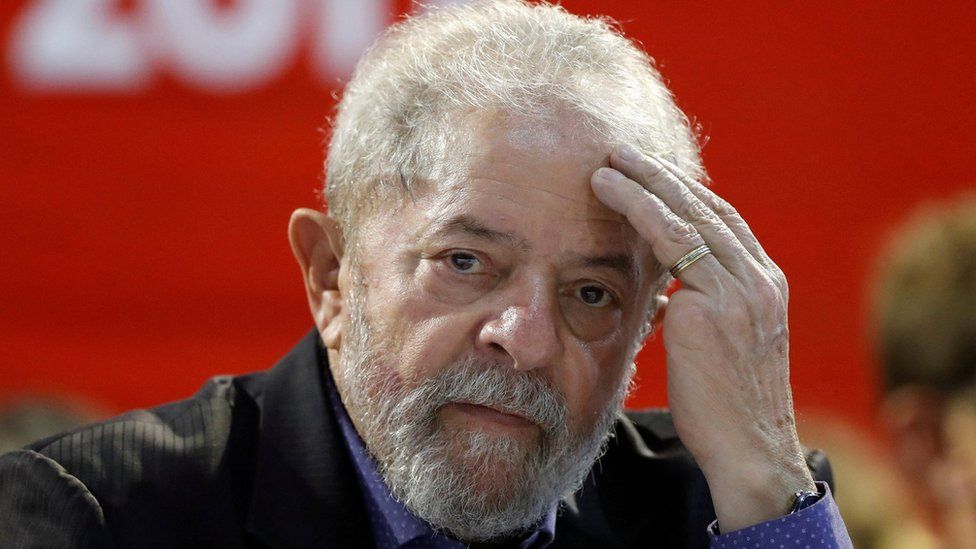
Brazil recalls its ambassador to Israel after President Lula’s comparison of Israel’s Gaza actions to the Holocaust prompts Israel to declare him unwelcome, leading to a diplomatic rift. (Photo: Reuters)
Brazil has taken the step of recalling its ambassador to Israel, prompting Israel to declare that Brazilian President Luiz Inacio Lula da Silva is not welcome in the country. This move follows a diplomatic fallout after Lula drew a comparison between Israel’s military actions in Gaza and the Holocaust.
Lula’s statement, made on Sunday, drew a parallel between the situation in the Gaza Strip and the atrocities committed by Hitler during World War II, where six million Jewish people were systematically killed. Israeli Prime Minister Benjamin Netanyahu strongly criticized Lula’s remarks, describing them as “disgraceful and grave.”
In response, Israeli Foreign Minister Israel Katz declared that Lula would not be permitted to enter Israel until he retracts his comments, labeling them as a “serious anti-Semitic attack.” Katz conveyed this message to Brazil’s ambassador, emphasizing that Lula is considered persona non grata in Israel until he rectifies his statement.
Brazil’s Ministry of Foreign Affairs reciprocated by summoning Israel’s ambassador to Brazil, Daniel Zonshine, for a meeting in Rio de Janeiro. Furthermore, Brazilian Foreign Minister Mauro Vieira recalled the Brazilian ambassador in Tel Aviv, Frederico Meyer, for consultations, with Meyer scheduled to depart for Brazil the following day.
Back home, Lula faced criticism for his statements from various quarters, including the Brazil-Israel Institute, which characterized his comments as “vulgar” and cautioned against their potential to fuel anti-Semitism. Notably, Lula had previously condemned the Hamas-led attacks on southern Israel as terrorist acts, but has since voiced strong opposition to Israel’s military response in Gaza.
The incident underscores the sensitivity and complexity of diplomatic relations, particularly in the context of conflicts with deep historical and geopolitical roots.











+ There are no comments
Add yours