

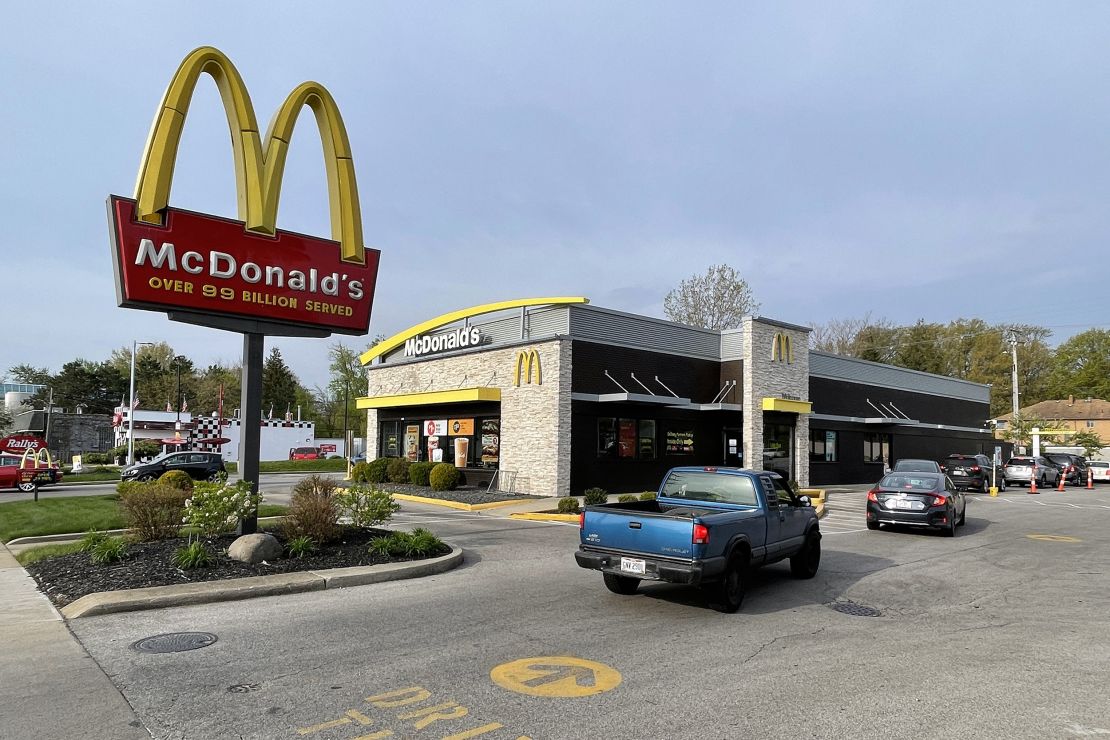
McDonald’s experiences its first quarterly sales miss in four years due to international slowdown, exacerbated by controversies surrounding the Israel-Gaza conflict, as CEO Chris Kempczinski acknowledges misinformation’s role while reaffirming support for impacted communities. (Image of Sport/Sipa USA/Reuters)
The popular fast-food chain, McDonald’s, had a rough quarter, reporting its first sales miss in almost four years. The international division didn’t grow as expected, partly due to ongoing conflicts, which the CEO blamed on misinformation. Following the disclosure, McDonald’s stocks experienced a notable 4% decline.
McDonald’s, along with other Western enterprises like Starbucks and Coca-Cola, found themselves embroiled in boycotts and demonstrations orchestrated by anti-Israeli activists. The Israel-Gaza conflict significantly impacted the company’s operations across various global markets, notably in regions encompassing the Middle East, China, and India.
Sales growth in these areas during the fourth quarter of 2023 fell drastically below market expectations, clocking in at a meager 0.7%. Countries like Malaysia, Indonesia, and France felt the brunt of the downturn, with the Middle East bearing the greatest impact.
Chris Kempczinski expressed little optimism for immediate improvement in these troubled markets as long as the conflict persisted. McDonald’s, renowned for its franchise model, observed a notable fraction of its outlets situated in the Middle East.
Tensions escalated further when McDonald’s Israel franchise announced the provision of thousands of complimentary meals to Israeli military personnel, sparking vehement calls for a boycott from detractors of Israel’s military actions in Gaza. This led franchise owners in predominantly Muslim nations like Kuwait, Malaysia, and Pakistan to distance themselves from the brand.
The CEO rebuffed the criticism as “disheartening and ill-founded,” squarely attributing it to misinformation. Despite global sales still managing to grow by approximately 4% in the fourth quarter, a sharp decline from the previous quarter’s 8.8%, McDonald’s encountered challenges in the US market, particularly from budget-conscious consumers favoring lower-priced menu items.
Echoing similar sentiments, Starbucks revised its annual sales projections downward, citing diminished foot traffic in Middle Eastern stores. McDonald’s reaffirmed its solidarity with those affected by the regional conflicts and pledged ongoing support for local communities amidst the turmoil.











+ There are no comments
Add yours