

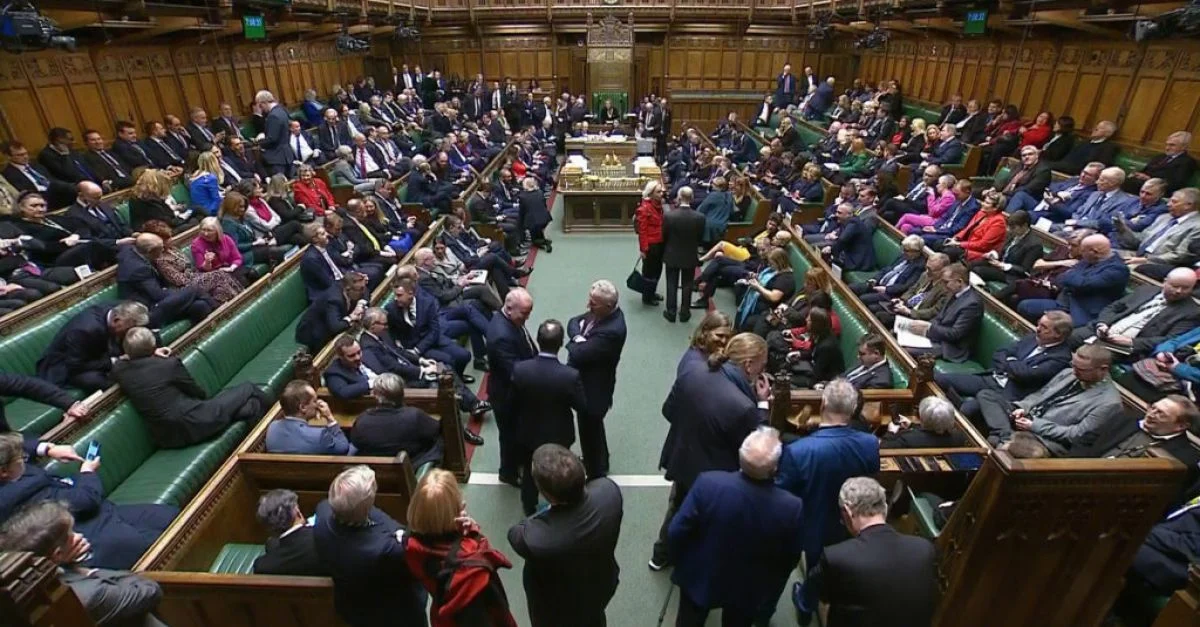
Parliamentary pandemonium erupts as Speaker Hoyle’s unprecedented decision sparks walkouts, accusations of a ‘constitutional crisis,’ and a dramatic vote in the UK’s House of Commons on Gaza ceasefire support. (AP Photo)
The hallowed halls of the UK’s House of Commons erupted into disarray as divergent political factions clashed over Speaker Lindsay Hoyle’s handling of a pivotal vote regarding support for a Gaza ceasefire. The discord reached a crescendo as members of the Scottish National Party (SNP) and the ruling Conservative Party staged a dramatic walkout in protest against the Speaker’s maneuvers.
The fracas stemmed from Hoyle’s controversial decision to depart from convention by permitting a vote that provided strategic advantage to the opposition Labour Party. This maneuver, some argue, averted a potential mutiny within Labour’s ranks regarding its stance on Israel’s conflict with Gaza.
The SNP initiated the parliamentary discourse by tabling a motion advocating for an “immediate ceasefire” in Gaza. Subsequently, both Labour and the Conservatives proposed amendments, each delineating distinct conditions they deemed requisite before endorsing a cessation of hostilities.
In a departure from tradition, Hoyle uncharacteristically greenlit voting on both amendments, a move met with audible disdain from certain quarters of the chamber.
The tumultuous session reached a boiling point when the Labour amendment was verbally ratified, circumventing the customary recorded vote procedure, further fueling accusations of a “constitutional crisis” leveled against Hoyle.
Penny Mordaunt, the government’s Leader of the House of Commons, lambasted Hoyle’s actions as a “hijacking” of the debate, precipitating the government’s withdrawal from the proceedings.
Hoyle’s decision, though, proved to be a lifeline for the Labour Party, sparing it from potential internal discord. This strategic maneuver echoes a previous episode in November when a similar SNP motion exposed fault lines within Labour’s leadership.
Pressure mounts on Labour leader Keir Starmer, who initially voiced staunch support for Israel’s military operations, to pivot towards endorsing an immediate ceasefire, amidst mounting dissent from within his party’s ranks.
Al Jazeera’s correspondent, Harry Fawcett, characterized Wednesday’s proceedings as a “farce,” highlighting the bitter fallout from the contentious vote.
Ian Blackford, an SNP MP, decried the parliamentary theatrics, lamenting that the day’s events diverted attention from the plight of Gazan civilians in dire need of respite from the conflict.
The uproar culminated in Conservative MP William Wragg’s motion of no confidence in the Speaker, underscoring the deep-seated resentment among certain parliamentarians over what they perceive as a breach of the Speaker’s traditionally impartial role.
In a conciliatory gesture, Hoyle later addressed the House, expressing regret for the tumultuous turn of events and acknowledging the polarizing nature of his decision-making.
“I have endeavored to navigate a path that upholds the integrity of this esteemed institution,” Hoyle conceded. “Regrettably, the outcome did not align with my intentions, and for that, I extend my sincerest apologies.”











+ There are no comments
Add yours