

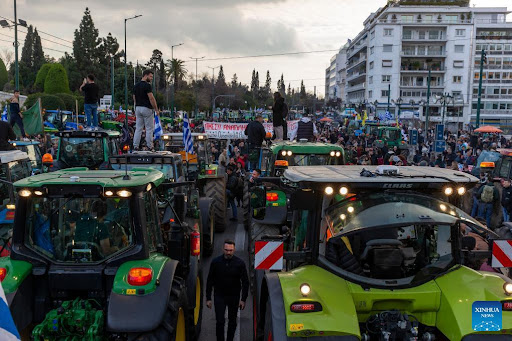
Amidst a sea of tractors and banners, Greece’s farmers defy budgetary constraints, demanding tax-free fuel and justice in a vibrant uprising that echoes in Athens. [Photo/Xinhua]
In a vibrant display of dissent, the streets of Athens were flooded not with cars but with scores of brightly colored tractors, their horns blaring, as thousands of farmers rallied outside Greece’s parliament. The air resonated with their cries against soaring production costs.
Amidst the sea of banners, one stood out boldly: “Without us, you don’t eat.” It encapsulated the sentiment of a community pushed to the brink, carrying mock coffins and funeral garlands as stark symbols of their struggle.
For weeks, these farmers have waged a battle, staging sporadic blockades along highways and in rural towns, their grievances mirroring those of their European counterparts. The scars of last year’s floods in central Greece still fresh, compounding their woes.
While the center-right government has extended sympathy, budgetary shackles bind its ability to meet the full breadth of demands. Substantial reductions in electricity costs have been promised, but for the farmers, it’s a mere drop in the ocean of challenges they face.
Tax-free fuel, debt forgiveness, curbs on foreign competition, and expedited compensation for natural disasters—they demand a holistic overhaul. The chasm between what they receive for their produce and what consumers pay looms large, a bitter reality underscored by Manolis Liakis, a farmer from Crete, who lamented the exorbitant fuel costs.
“Farmers can’t sell their products for ridiculously low prices while the consumer buys them at extremely high prices,” Liakis emphasized, shedding light on a systemic injustice.
As the rally culminated peacefully, some farmers chose to hold vigil outside parliament through the night, their tractors serving as silent sentinels of defiance.
In a remarkable display of solidarity, hundreds of students joined the farmers, adding their voices to the chorus of dissent against government plans to dismantle the state monopoly on university education.
Despite initial tensions, the government opted not to block Tuesday’s protest, instead deploying police to facilitate traffic diversion. Much of central Athens lay paralyzed, a testament to the power of collective action.
Prime Minister Kyriakos Mitsotakis struck a conciliatory tone, acknowledging the gravity of the situation. While he remained firm on the issue of tax breaks and concessions, he expressed willingness to engage in dialogue—a glimmer of hope in a landscape marked by discord and discontent.










+ There are no comments
Add yours