

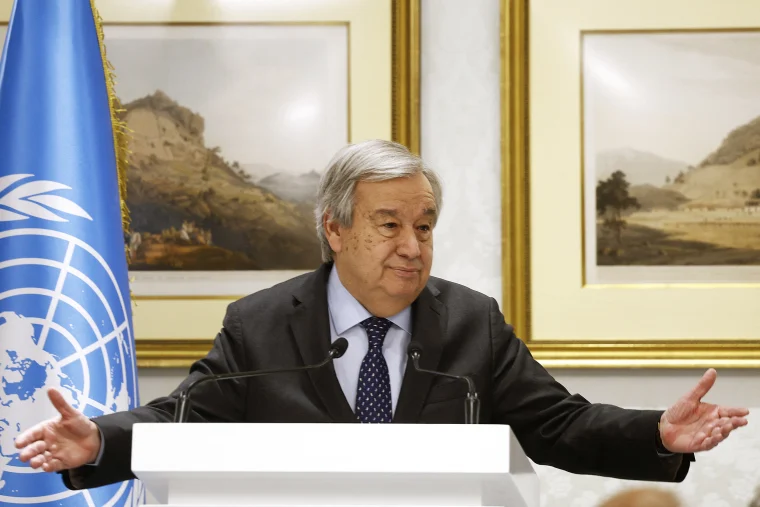
The UN-led meeting in Doha grapples with the absence of Afghan representatives due to unmet conditions, highlighting critical issues such as bans on women and girls, the UN special envoy appointment, and the economic impasse, as global actors seek a unified response to Afghanistan’s plight. (Photo: Karim Jaafar / AFP – Getty Images)
“The conditions denied us the right to talk to other representatives of Afghan society and demanded a treatment that would, to a large extent, be similar to recognition,” emphasized the UN chief.
The recent two-day meeting concluded on Monday in Doha, convening member states and international envoys to discuss various issues confronting Afghanistan. However, the absence of the Taliban was conspicuous due to unmet demands.
Following the withdrawal of United States and NATO forces in August 2021, the Taliban seized control of Kabul. Despite this, no nation acknowledges it as Afghanistan’s legitimate government, with the UN asserting that recognition is nearly impossible as long as bans on female education and employment persist.
The primary bone of contention between the international community and the Taliban revolves around the prohibitions imposed on women and girls. Since reclaiming power, the Taliban has mandated women to cover up outside, barred girls and women from pursuing education beyond certain levels, and restricted their access to public spaces like parks, gyms, and baths. The Taliban defends these bans as domestic affairs, rebuffing criticism as unwarranted external interference.
Secretary-General Guterres stressed the importance of lifting these restrictions. In January, Taliban spokesperson Zabihullah Mujahid dismissed UN concerns regarding Afghan women, stating, “Afghan women wear hijab of their own accord.”
Another sticking point is the appointment of a UN special envoy in Afghanistan, which the Taliban opposes. Guterres emphasized the necessity for “clear consultations” with the Taliban to define the envoy’s role and to make the appointment appealing to them.
The refusal of many governments, international organizations, and aid agencies to continue funding Afghanistan in response to Taliban policies has dealt a severe blow to the country’s economy. Guterres expressed the need to break this deadlock by creating a roadmap that addresses the concerns of both the international community and the de facto authorities of Afghanistan.
Lotfullah Najafizada, CEO of Amu TV, highlighted the Taliban’s strategic blunder in skipping the talks, emphasizing the importance of the Taliban understanding the global stance. He underscored the necessity for the international community to present a unified front when dealing with the Taliban.
The Doha meeting also aimed at fostering a more coordinated response to the challenges in Afghanistan. Guterres proposed the formation of a “contact group” comprising a select number of states to engage with the de facto authorities of Afghanistan in a more cohesive manner, suggesting that it could include permanent members of the UN Security Council, neighboring nations, and relevant donors, but stressed that the decision rests with member states.









+ There are no comments
Add yours